
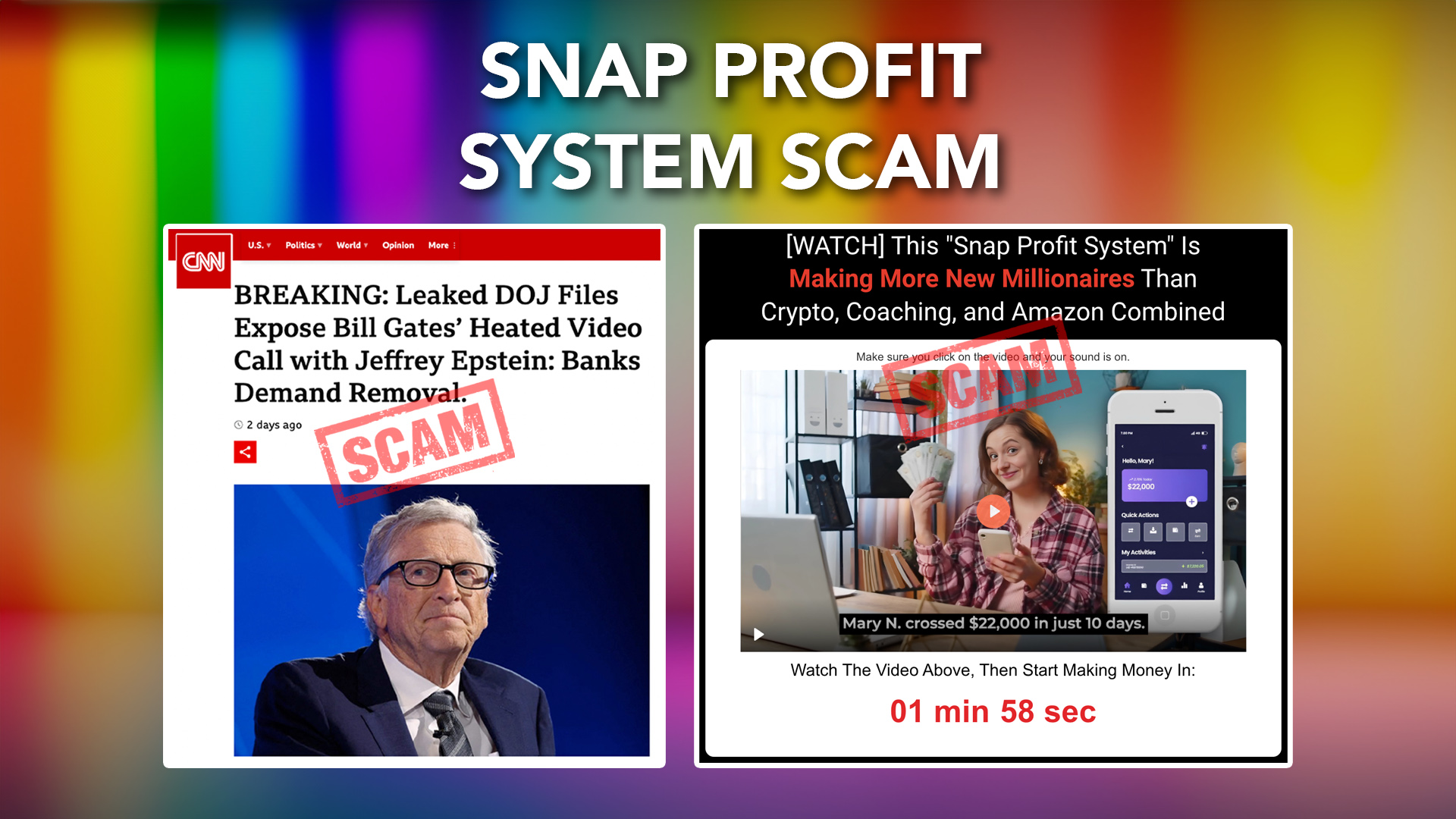
People searching for Snap Profit System reviews often encountered sensational claims tied to Bill Gates, Jeffrey Epstein and supposedly leaked Department of Justice files. The marketing alleged a hidden video call, a suppressed financial system and an easy path to wealth through a so-called Snap Profit System app. No evidence supported those claims. I reviewed the promotions and found fabricated stories, fake news-style pages and artificial urgency designed to push consumers into a high-risk money funnel.
The Snap Profit System promotions repeatedly attached famous names to a promise of effortless income. The ads circulated a fake headline that claimed leaked DOJ files exposed a heated video call between Bill Gates and Jeffrey Epstein and claimed banks demanded removal. CNN did not publish the story used in the ads. The materials also showed multiple signs of AI-generated content, including overly polished phrasing and images that looked unnaturally smooth and glossy.
Bottom line in plain English: Consumers should steer clear of “free money” online offers that sound too good to be true. Anyone who already purchased this product should contact their credit card company if they could not reach a legitimate company representative.
What the Snap Profit System claimed
The Snap Profit System marketing claimed users generated income without experience, skills or effort. The sales pages described the product as a gateway to financial freedom and framed it as a rare opportunity revealed through secret conversations between powerful figures. The pitch also claimed regulators and major institutions scrambled to erase evidence from the internet, a familiar narrative used across many modern scam funnels.
The promotions pushed a simple script: Register, watch a long video and pay to activate the system. The pages emphasized scarcity and warned that access remained limited because of a sudden influx of interest. The pricing commonly appeared as a discounted $97 offer reduced from a higher list price.
Fake news pages and impersonation tactics
The Snap Profit System ads often led users to websites designed to resemble legitimate news outlets. Those pages copied layouts, fonts and branding cues associated with CNN while presenting a fabricated story. The pages also leaned on vague sourcing and dramatic claims instead of verifiable reporting.
The writing style raised additional concerns. The copy used sweeping statements and generic phrasing that resembled automated promotional text rather than professional journalism. The pages also relied on sensational headlines and implied exclusivity to keep readers moving toward a signup screen.
Redirects, countdowns and combusinesslaunch.com
The funnel redirected users to a video hosted through combusinesslaunch.com. The page displayed a countdown timer and claimed users already held balances exceeding $20,000. The site pressured immediate action by implying the opportunity would expire.
Consumers who searched for Snap Profit System reviews also described payment problems after they entered card details. Several reported charges beyond the advertised amount. Some said card issuers flagged transactions or blocked attempted charges, and others said they could not reach any legitimate support channel.
Group chats and delayed withdrawals
Several people who contacted me after searching for Snap Profit System reviews described a second stage of the funnel. Promoters steered them into WhatsApp or Messenger group chats and promised hands-on coaching. The chats showed dashboards that claimed accounts grew steadily while the messages encouraged additional deposits.
That structure matched pig-butchering style investment frauds, which often used staged wins and delayed access to keep victims engaged. The chats commonly discouraged withdrawals and offered new reasons to wait. When victims pushed to withdraw money, the excuses escalated and access sometimes vanished.
Where the ads appeared
The Snap Profit System marketing appeared across multiple ad ecosystems. The promotions surfaced in Facebook and Instagram feeds alongside legitimate posts, a pattern that mirrored trends in many Meta scams. Similar hooks also might circulate through short-form video placements that resembled tactics used in many TikTok scams, where fast emotional claims drove clicks before users asked basic questions.
Did legitimate Snap Profit System reviews exist?
No evidence showed legitimate Snap Profit System reviews appearing online at the time I reviewed the campaign. People searched for Snap Profit System reviews because the ads raised suspicion, not because established consumer reporting existed. Over time, consumers could look for credible consumer reporting signals on the Better Business Bureau, Trustpilot or Consumer Reports.
People who believed fraud occurred also could report the activity to the Federal Trade Commission, which collected consumer complaints and tracked patterns across recurring schemes.
Final thoughts on Snap Profit System reviews
The Snap Profit System followed a familiar template: sensational claims, famous names, fake credibility and urgent calls to act. The lack of verifiable sourcing, combined with reports of payment problems and inaccessible funds, signaled a high-risk online offer. Unrelated companies or products with similar names had no connection to this marketing, and consumers often wasted time and money when they contacted the wrong entities.
Important Note: I generated this article with the help of ChatGPT. Yes, AI. Hear me out. ChatGPT sourced my hours of manual work in creating one or more YouTube videos for this online scam. The reason I chose ChatGPT to write my article, instead of me writing the article manually, is because of how fast AI is in producing warnings to help keep people away from the thousands of scams that exist online. Scammers are using AI to scam consumers at scales unlike humanity has ever seen before. At this rate, the only way to make a meaningful dent in scammers’ work — and to save as many consumers as possible — is not to manually and slowly write scam-busting articles the old-fashioned way. The answer is to ask AI to help get the word out to people to save consumers from potentially experiencing some of the most devastating moments of their lives, which is exactly how many people feel when they’ve been scammed. And yes, this entire note was actually written by me. Thank you for reading.
While I am understanding that this is a total scam, I’m still curious as to what it is that was stated could make you so much money as they NEVA did state where the money is coming from or how it’s attained.
They never really give specifics, since it’s a scam, as you said. It’s all a ruse with fancy marketing.