
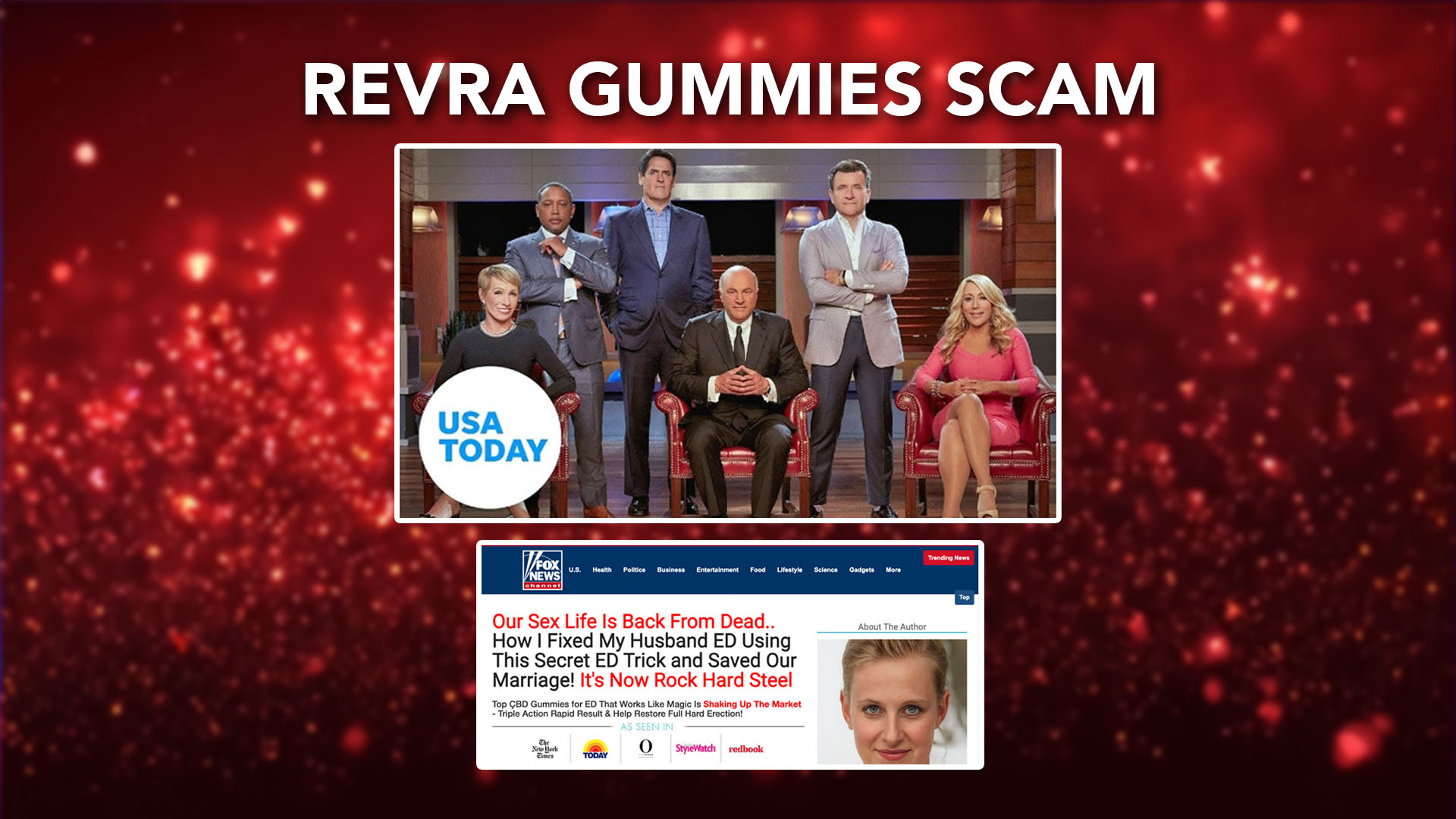
Searches for Revra Male Performance Gummies reviews increased after questionable marketing circulated online claiming major media endorsements and celebrity backing. The promotional material referenced Fox News, the New York Times, the Today show, Oprah Magazine, CNBC, CNN, USA Today, Men’s Health, The Doctors and “Shark Tank.” None of those outlets or shows endorsed or covered Revra Male Performance Gummies. The marketing also referenced Dr. Oz, formally known as Dr. Mehmet Oz, despite no involvement with the product.
People who searched for Revra Male Performance Gummies reviews often did so after they saw ads or sponsored links that looked untrustworthy. The ads promoted male enhancement claims and suggested the gummies achieved viral success, broke sales records or secured major television deals. Those statements lacked evidence and followed patterns often seen in online scam marketing.
Bottom line in plain English: Consumers should steer clear of medicinal products marketed with questionable or potentially deceptive claims, especially when the product does not appear for sale in their local pharmacies and the company does not clearly identify its true founder, staff or mailing address. Consumers should also be cautious when an unofficial-looking website offers money back guarantee promises or raises the risk of charging monthly subscription fees. In those situations, the safest move is to close the website and make an appointment with a medical doctor. Anyone who already purchased a product after seeing questionable claims should contact their credit card company if they could not reach a legitimate company representative.
Why Revra Male Performance Gummies Reviews Stayed Hard to Find
No reliable independent Revra Male Performance Gummies reviews appeared online at the time of reporting. Consumers instead encountered promotional pages, advertorial-style content or checkout funnels that pushed sales rather than provide neutral information. That absence of genuine reviews drove many people to search repeatedly for Revra Male Performance Gummies reviews, hoping they could confirm whether the product operated as legit.
The research for this article traced some ad paths to a website operating at tryrevra.com. The site attempted to sell Revra Male Performance Gummies using urgency tactics, limited-time discounts and reassurance language around refunds. The funnel used sales strategies that matched patterns seen in aggressive affiliate promotion of supplements.
False Media Endorsements and Dr. Oz References
The marketing for Revra Male Performance Gummies used logos and references to major networks, publications and talk shows. The content aimed to create the impression of legitimacy through association. The promotional pages implied that respected outlets tested or praised the gummies, and the pages offered no evidence to support those implications.
One recurring tactic leaned on “Shark Tank” language suggesting a historic investment deal. The claim appeared fabricated. The ads also referenced Dr. Oz, including his full name, Dr. Mehmet Oz, even though no verified connection tied him to the product.
Subscription Risks and Money-Back Guarantee Concerns
Consumers researching Revra Male Performance Gummies reviews often worried about subscription charges. Many supplement funnels enrolled buyers into recurring billing programs that charged significant monthly fees. The marketing did not always make those terms clear before purchase.
Some sales language promoted money-back guarantees as reassurance. Consumers should treat those promises cautiously, especially with medicinal products marketed online. Many viewers in similar cases reported refund difficulties after they purchased products promoted through questionable claims.
Where the Scam Marketing Showed Up Online
The scam marketing might have appeared in Facebook or Instagram ads, a pattern that repeatedly fueled misleading supplement campaigns documented under Meta scams.
The marketing might have also appeared in TikTok ads, where short-form videos often pushed sensational claims without substantiation. Similar promotions appeared across cases documented under TikTok scams.
How Consumers Researched Products Going Forward
Consumers sometimes found helpful reporting by checking established consumer watchdog organizations. The Better Business Bureau sometimes listed complaints or company profiles that offered additional context. Users also tracked platforms like Trustpilot or Consumer Reports, which occasionally documented consumer experiences or evaluated companies.
Anyone who believed they encountered deceptive practices or suffered financial harm could report the activity to the Federal Trade Commission, which tracked patterns of fraud and pursued enforcement actions when appropriate.
What the Findings Showed
The findings surrounding Revra Male Performance Gummies reviews did not prove the product itself operated as a scam. The evidence instead showed misleading marketing tactics, false endorsement claims and sales funnels that raised serious consumer protection concerns. That distinction mattered because affiliates or third parties appeared to misuse the brand name without clear evidence of direct involvement from the product’s creators.
For consumers, the lesson stayed consistent. Marketers relied on fabricated authority, unclear company details and risky billing structures, and consumers benefited by walking away and consulting a licensed medical professional.
Important Note: I generated this article with the help of ChatGPT. Yes, AI. Hear me out. ChatGPT sourced my hours of manual work in creating one or more YouTube videos for this online scam. The reason I chose ChatGPT to write my article, instead of me writing the article manually, is because one of the very few good uses of AI is how fast it can be to produce warnings to help keep people away from the thousands of scams that exist online. Scammers are using AI to scam consumers at scales unlike humanity has ever seen before. At this rate, the only way to make a meaningful dent in scammers’ work — and to save as many consumers as possible — is not to manually and slowly write scam-busting articles the old-fashioned way. The answer is to ask AI to help get the word out to people to save consumers from potentially experiencing some of the most devastating moments of their lives, which is exactly how many people feel when they’ve been scammed. And yes, this entire note was actually written by me. Thank you for reading.