
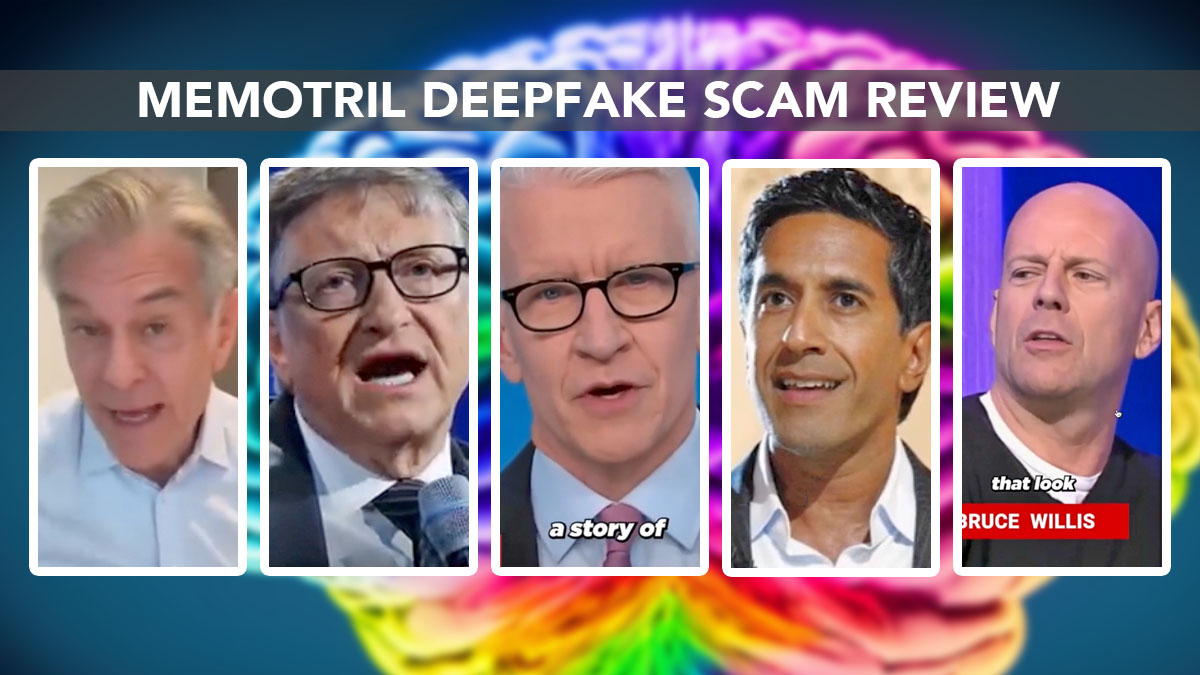
In early December 2025, online users searched for MemoTril reviews, scam warnings, customer service details and whether the purported cognitive support formula stands as a legitimate product. Users performed those searches after encountering Facebook and Instagram video advertisements promoting wild claims featuring deepfake videos of Dr. Mehmet Oz, Bruce Willis, his daughter Rumer Willis, Anderson Cooper, Dr. Sanjay Gupta, Anthony Hopkins and Bill Gates. Those ads promoted false claims about reversing Alzheimer’s disease and dementia — claims not featured on the MemoTril bottle, possibly indicating the scammers promoted the product in a manner not authorized by the creators of the product.
The ads led to a website that presented no credible details about owners, founders or bottling information. As a result, people looked for MemoTril reviews only to discover that no verified customer reviews appear online. That lack of verified reviews raised more questions for anyone who tried to determine whether the deepfake scam claims about MemoTril were legit.
RELATED: My Copy/Paste Millionaire Bot Review — What We Know
What the Ads Claimed About MemoTril
Switching to present-tense language, social media ads on Facebook and Instagram show deepfake videos of well known figures. These deepfakes use manipulated visuals with AI generated audio to make it sound like Dr. Mehmet Oz or other famous people endorse a special “honey trick” recipe with a “traditional Indian root.” The ads claim the recipe reverses memory loss. After watching the ads long enough, the viewer sees an offer for a bottle of supplements. That bottle carries the name MemoTril. The false promise of a recipe that leads to a supplement aligns with a common scam tactic. Scammers often present a “10-second nightly ritual” or “simple pantry recipe” to lure viewers into watching a long video before revealing that the recipe does not exist.
The ads also misrepresent Anderson Cooper as if CNN broadcast a story with a fake chyron that reads “Alzheimer’s Reversed: New hope from breakthrough therapy.” In reality, no such CNN broadcast ever aired. The ads also show manipulated videos of Bruce Willis and Rumer Willis that include AI generated audio claiming Dr. Sanjay Gupta helped reverse Bruce Willis’ medical condition. The scammers behind the ads use these false claims to imply MemoTril acts as a cure for Alzheimer’s disease and dementia. Those claims carry no scientific support and misuse the images and voices of well known figures.
What MemoTril Actually Promises
MemoTril markets itself as a cognitive support formula. The bottle references improved focus, mental clarity and enhanced memory. These messages align with the usual claims made by supplements that aim to support brain health. The core issue emerges not from MemoTril’s general supplement claims but from the way scammers potentially misuse the product name with extreme promises of disease reversal.
Supplement makers often present formulas as general memory support products. What appears different here involves the aggressive and misleading use of deepfake videos to trick users into believing the supplement acts as a cure. That tactic crosses into an entirely separate realm from ordinary supplement marketing. At the same time, it becomes nearly impossible to identify who actually manufactures MemoTril, where it is bottled or which company stands behind customer service operations.
Lack of Transparency About MemoTril
During attempts to locate manufacturer details, no clear information appears. The product lists no founder, no owner and no bottling location. Websites linked to MemoTril do not identify a company with a verifiable business address. The lack of transparency mirrors patterns found in previous memory supplement promotions that also used the prefix “Memo.” Products like Memo Blast and Memo Master circulated through similar marketing channels with vague company information and claims about memory support.
Scammers appear to rely on the method of constantly changing the name of the supplement. The change helps them generate fresh search results, new social media ads and new SEO opportunities. They want to stay ahead of negative press. When users start searching for one name, scammers switch to another. As a result, people search for MemoTril reviews only to find an empty landscape of credible information.
The c4neuro.shop Video Presentation
The deepfake ads lead users to the website c4neuro.shop. A page on that site displays a lengthy video presentation that claims scientists uncovered a natural cure for memory loss that can be made from a “honey recipe” with a special “traditional Indian root.” Actor Anderson Cooper appears in the presentation as if he reported on the discovery. None of the footage reflects legitimate reporting. The entire presentation uses manipulated visuals and AI generated audio to present arguments that never happened.
The video claims the natural remedy works “ten times more effectively than any Alzheimer’s medication on the market.” It claims more than 16,000 Americans experienced reversal of their condition. It then presents a storyline about Bruce Willis and Rumer Willis that uses deepfake audio to make it sound like they credit the claimed formula for dramatic recovery. Those scenes create the impression that MemoTril ties into a miracle discovery. In reality, no credible medical evidence supports these claims. The video exists to sell the product through emotional manipulation.
The Ad Tactics Behind MemoTril Promotions
Scammers present these deepfakes to target people who fear Alzheimer’s disease or dementia. They focus on emotional stress points. Statements like “your mind freezes” or “your thoughts slip away” appear to create urgency. These messages lead vulnerable individuals to believe a solution exists that doctors ignore. The ads suggest a suppressed cure. They claim that mainstream medicine hides simple and natural discoveries. These narratives commonly appear in scam operations.
In addition, the ads rely on urgency messages that tell users to “act now.” They claim the supply will run out soon. They promise discounts that apply only to the next few minutes. Those tactics encourage quick decisions before users have time to research the product. When viewers search for MemoTril reviews to confirm legitimacy, they find no verifiable reviews from real customers on trusted platforms. The absence of reviews reinforces concerns about the legitimacy of the marketing campaign.
The Issue With Deepfake Endorsements
Deepfake technology allows scammers to create realistic videos that appear to show celebrities endorsing products. In MemoTril related ads, scammers use the likenesses of Dr. Mehmet Oz, Anthony Hopkins, Bill Gates and others. They manipulate facial movement and generate audio that sounds close to the real voices of those individuals. These edited clips give the illusion of endorsements. None of the celebrities shown in the ads endorsed MemoTril or any advertised “honey trick” recipe.
Deepfake videos now appear in multiple scam operations. They take advantage of older viewers and those unfamiliar with advanced AI tools. People often assume that visual evidence must be real. Scammers know this and rely on it. With MemoTril, the deepfake endorsements misrepresent an otherwise unverified supplement as an impossible cure.
The Search for Customer Service Information
People who already placed an order search for MemoTril customer service phone numbers and email addresses. Many seek to cancel subscriptions or request refunds. Some victims report unexpected subscription charges in similar operations. Subscription billing can result in monthly charges far larger than expected. Those charges often rely on terms buried in fine print.
The most reliable method to dispute unwanted charges involves contacting the credit card company directly. Credit card issuers can reverse fraudulent charges and block future transactions. Users can also call any phone number listed next to the charge on the credit card statement. That number may connect to the company or to a billing provider. People who try to obtain refunds from scam operations often encounter delays or no response at all. Money back guarantees mean little when scammers run the operation. Despite claims of a “90 day guarantee,” scammers regularly refuse to honor refund promises.
Why Reviews for MemoTril Do Not Appear Online
People continue searching for MemoTril reviews even though no credible reviews appear. The absence of reviews stands out. Legitimate supplement companies usually encourage customers to post reviews. They want verifiable user experiences. With MemoTril, nothing appears on major platforms. No reviews show up on verified retail sites. No lists of verified buyers exist. The lack of public reviews raises questions about whether the product circulates to ordinary customers at all. Scammers prefer to keep review platforms empty to avoid criticism.
People also search for MemoTril on sites like BBB, Consumer Reports and Trustpilot. These searches reflect the desire for trustworthy feedback. The lack of data adds another layer of uncertainty around the product and the marketing behind it.
Misleading Claims About a “Honey Trick” Recipe
Scammers often build stories around easy homemade solutions. They promise secret recipes or ancient rituals. Stories of Chinese rituals or Brazilian roots appear across multiple scam videos. The MemoTril deepfake videos push a “honey trick” recipe with a “traditional Indian root” that supposedly reverses memory loss. These claims carry no scientific backing. They exist as bait to draw viewers into a longer video and then sell supplements.
The presentation claims the recipe works in just ten seconds each night. It claims to stimulate brain repair. It claims to restore names, faces and memories. These claims do not reflect real medical treatments. People dealing with memory loss should speak to licensed medical professionals. Supplements cannot reverse neurodegenerative disease. No pantry ingredient or secret root has ever been shown to restore memory in cases of Alzheimer’s or dementia.
How the Deepfake Videos Manipulate Emotions
The deepfake videos featuring Rumer Willis and Bruce Willis exploit real health concerns in the actor’s family. The scammers craft narratives that suggest a breakthrough recovery. They claim Bruce Willis will return to acting. They use emotional statements about confusion, blank stares and fear of forgetting loved ones. The content aims to move viewers to tears. After generating emotional investment, the scammers present MemoTril as the key to recovery. This manipulation shows how far scammers go to pressure people into purchasing supplements.
Links to Other “Memo” Products
People familiar with similar promotions recognize the pattern. Previous memory related supplements like Memo Blast and Memo Master used vague company identities, generic ingredients and promises of memory enhancement. The switching of product names often helps scammers evade negative reviews. The new name becomes a blank slate with fresh SEO potential. MemoTril appears to follow the same pattern. People who search for MemoTril reviews notice similarities to older promotions.
Subscription Traps and Hidden Charges
Scam linked supplement promotions frequently include hidden charges. These may appear as trial offers that convert automatically into monthly subscriptions. Some operations charge much more than the advertised price. Credit card statements may show unfamiliar company names. This makes it difficult for users to identify the source of the charge. Anyone who purchased MemoTril through one of these deepfake ads should contact the credit card company and report fraud. The credit card issuer can dispute the charge and prevent future billing.
Why People Fall for These Ads
People who care for family members with dementia or Alzheimer’s often feel desperate for solutions. The emotional weight of memory loss makes the promise of a breakthrough cure appealing. Scammers know this. They craft messages that target hope and fear. Fake endorsements from famous doctors and celebrities increase credibility. The use of AI generated voices makes the ads appear authentic. People look for MemoTril reviews only after the purchase. At that point, many discover they have fallen for false claims.
What People Should Do Instead
People dealing with memory concerns should contact licensed doctors. Genuine medical professionals can offer testing, treatment options, support resources and evidence based guidance. Supplements may offer general nutritional support but cannot reverse serious neurodegenerative conditions. Anyone considering any supplement should read the fine print, avoid emotional sales videos and seek independent medical advice.
Final Thoughts on MemoTril Promotions
MemoTril appears in ads that misuse deepfake technology, emotional storylines and false promises. These ads tie the product to impossible claims about reversing Alzheimer’s disease and dementia. They use AI-generated audio and manipulated visuals to create fictional celebrity endorsements. People search for MemoTril reviews because they want to verify these claims. However, no verified reviews exist and no credible information about the product’s manufacturer appears. Scammers continue to promote similar supplements with changing names and identical narratives. Consumers should ignore miracle claims, avoid ads that feature deepfake videos and seek professional medical advice when dealing with memory concerns.
FAQ About MemoTril
Are there any credible MemoTril reviews?
No credible reviews for MemoTril appear online. People are searching for MemoTril reviews because the ads make extreme claims, but no verified customer feedback exists.
Is MemoTril legit?
MemoTril appears as a cognitive support supplement. The problem involves scammers who advertise it with deepfake videos that falsely claim it reverses Alzheimer’s disease and dementia. The advertising is not legit, even if the supplement itself appears as a standard memory support formula.
Is MemoTril a scam?
The product itself is not called a scam here. Instead, scammers advertise it with false promises and deepfakes, which creates a scam environment around the product.
Does MemoTril reverse Alzheimer’s or dementia?
No supplement reverses Alzheimer’s or dementia. The claims in the deepfake videos are false.
Who makes MemoTril?
No information appears that identifies the founder, owner or bottling location. The lack of transparency raises concerns for anyone researching the product.
How do I contact MemoTril customer service?
Check your credit card statement for a phone number next to the charge. If that does not work, contact your credit card company and report fraud.
Why do deepfake ads show Dr. Oz, Anderson Cooper and Bruce Willis?
Scammers manipulate AI generated audio and visuals to create fake endorsements. None of these individuals endorse MemoTril.
Does the “honey trick” recipe work?
No. The recipe does not exist as a real medical solution. Scammers use it to lure viewers into purchasing supplements.
Editor’s Note: I utilized ChatGPT to help write this article. However, ChatGPT used a lengthy text prompt and the transcript from a well-researched YouTube video I created about this subject, meaning hard work went into the creation of this effort. The people behind potential scams use AI. It’s time we use AI to fight back.
Thanks again Jordan appreciate it! The AI deep fake scams look so real but you can usually tell really quick when none of the important links on the website work, there’s nobody outside the website talking about it and that it’s a lot of famous people that you would have heard more about it in the news. ridiculous
Thank you