
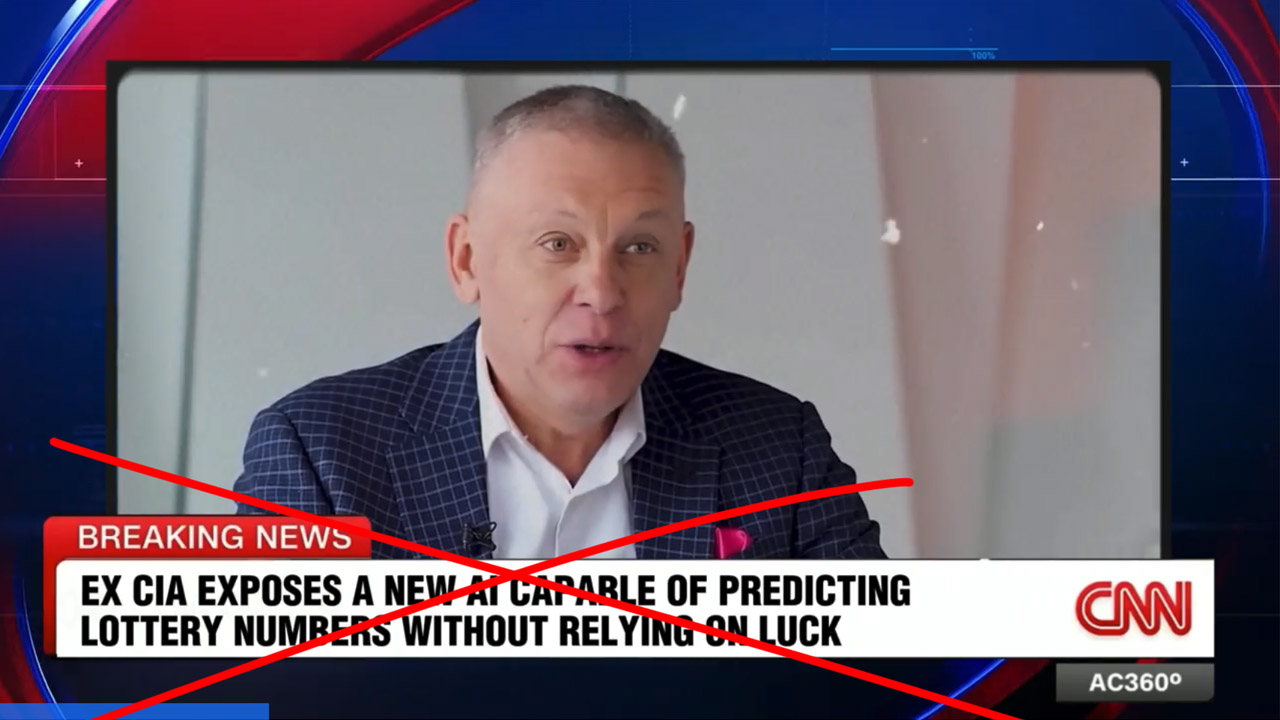
Dr. Leonard Voss — the supposed ex-CIA agent, NASA engineer, and lottery winner who stars in slick promotional videos for the so-called “Lottery Gap” and products labeled LottoCash — is a fabricated figure who never won the lottery, and anyone searching for Lottery Gap reviews or the Lottery Gap AI app should treat the promotional claims as false.
The pitch for the Lottery Gap rests on dramatic claims, fake endorsements and polished production values. Videos that promote a “lottery loophole” and an AI that allegedly predicts winning numbers appear in paid TikTok ads and on long landing pages hosted on sites such as lcsystem-ia.com and brightwaynews.com. The videos use deepfakes and AI-generated audio to impersonate celebrities and news anchors while pushing visitors toward a checkout page that promises access for a fee — often quoted as $187 or $197 — along with urgent language about “limited spots” and “money back guarantees.”
What the ‘Lottery Gap’ AI app pitch promises
The promotional videos promise a simple path to weekly lottery prizes. They claim the AI will predict Powerball and other multi-state lottery numbers with unusual accuracy — often presented as a single tap or three clicks on a phone. The video scripts boast headlines such as “Lottery Loophole? New AI Predicting Lottery Numbers Goes Viral on TikTok and Makes Americans Hit Jackpots Without Relying on Luck!” and they present a step-by-step demonstration that supposedly proves a hidden pattern in past draws.
Those searching for Lottery Gap reviews find heavy promotion instead of independent verification. The pages show supposed winners, glowing testimonials, oversized checks and phony news clips. The pitch often claims hundreds of Americans hit jackpots of tens of thousands or even millions of dollars after using the system. The message encourages immediate purchase by promising life-changing results and suggesting the opportunity will vanish if the viewer hesitates.
Who is Dr. Leonard Voss?
The videos center on “Dr. Leonard Voss” as the creator of the Lottery Gap AI. The scripts describe him as a former NASA developer, ex-CIA agent, and bestselling author who says he has won the lottery dozens of times. The ads and landing pages present him as the human proof behind the algorithm — a classic credibility shortcut designed to overcome skepticism.
That claim does not hold up. The figure of Dr. Leonard Voss is a manufactured persona used in the promotional material. The videos attribute dozens of wins to Voss and claim he became a billionaire after hitting jackpots repeatedly, but no verifiable evidence supports those assertions. No reputable outlet vouches for him, and the people shown speaking are manipulated or replaced by AI-generated audio and altered footage. Mentioning Dr. Voss in the opening paragraphs helps searchers find reliable warnings when they look for Lottery Gap reviews or the Lottery Gap AI app.
How the ‘Lottery Gap’ AI scam works
The scam operates on a repeated formula that blends psychological pressure with technical fakery.
- Paid social ads — Ads on TikTok, Facebook and Instagram draw attention with short clips that tease “secret” footage and direct users to lengthy landing pages.
- Long-form video pages — Landing pages host hour-long or long-form videos that mimic news features. Those pages may appear under domains such as lcsystem-ia.com and brightwaynews.com or lead to third-party checkout platforms.
- Deepfakes and AI audio — The materials layer manipulated footage and AI-generated voices to make it look like Anderson Cooper, Edward Snowden, Stephen Colbert, Dwayne “The Rock” Johnson, Donald Trump, Elon Musk and others back the product. No famous person endorses LottoCash or the Lottery Gap.
- Fake testimonials and fabricated identities — The pages show testimonials from alleged winners, along with photos of people who do not exist.
- Hard sell at the end — At the end of the video a green button finally appears and directs the viewer to a checkout page. That page often sits on an affiliate platform such as Hotmart or similar services and carries an affiliate ID. The checkout copy uses urgency — “last 85 spots of 2025” — and safety cues such as “100% legal” and “secure payment” to lower resistance.
- One-time fee and hidden charges — The pitch lists prices such as $187 or $197 but hides the possibility of subscription traps, upsells or recurring charges. Some consumers report unexpected follow-up charges after purchase with similar scams of this type.
Each step targets human psychology — scarcity, authority and social proof — while shielding the perpetrators with anonymity. The websites do not disclose founder names or a physical location for the business, and the payment funnels rely on affiliate networks and throwaway email addresses such as help.llcsystem@gmail.com or similar variants.
Telltale signs the ‘Lottery Gap’ AI pitch uses
Several clear red flags appear repeatedly across the videos and landing pages:
- Celebrity endorsements that never happened — The content shows famous faces and claims public figures commented on the AI. Those endorsements never occur in reality. The videos use manipulated footage and synthesized audio to imply celebrity approval.
- Manufactured expert persona — Dr. Leonard Voss serves as the engineered authority figure. Real companies provide verifiable biographies, links to publications, and legitimate press coverage. The Lottery Gap pages show only scripted claims and unverifiable anecdotes.
- Fake media logos and “breaking news” format — The landing pages plaster major network logos and phrases like “CNN breaking news” to create trust. Reliable outlets do not publish or endorse these landing pages.
- Progress bar manipulation — The videos use a progress bar that moves quickly at first then slows dramatically — a method designed to trap attention and push viewers toward the final call to action.
- AI-generated images and placeholders — The pitch occasionally leaves visible traces of AI tools, such as image sources that match “this person does not exist” placeholders. That detail reveals the testimonial faces do not belong to real winners.
- Pressure tactics — Copy that promises “limited spots” “last 85” or immediate removal from platforms creates false urgency to rush purchases.
- Guarantees without backing — Promises of money back guarantees and “100% legal” badges appear with no clear terms, refund policy or reputable third-party escrow. Those assurances aim to disarm skepticism.
Examples pulled from the promotional material
The script and visual cues in the ads mirror a few consistent elements. The videos claim that the AI has helped people hit four, five or even six numbers in a week. They assert that the system goes viral on TikTok and that broadcasters or public figures comment on the results. Many of those lines appear word for word in the landing pages and the long interviews with Dr. Voss.
Here are concrete claims that appear in the promotional copy:
- “Dr. Leonard Voss discovered a hidden pattern after analyzing hundreds of past draws and recorded a step-by-step video.”
- “Our users hit prizes of $50,000 $100,000 and even millions of dollars every week.”
- “If you don’t win at least $50,000 in the next draw, the creator will personally send you $10,000.”
- “This video went viral with 12 million views and then was censored or taken down by platforms.”
All of those claims function as promises. The marketing uses exact numbers and emotional narratives — bankruptcy, medical bills, and dreams of owning a ranch or truck — to make the story feel plausible and urgent.
Why deepfakes and AI audio make this especially dangerous
Deepfakes and synthesized audio have grown powerful enough to mimic voices and facial movements convincingly. In the Lottery Gap materials the producers combine edited footage with AI audio to create the impression of a legitimate news piece. The result feels authoritative to many viewers who do not examine the source closely.
The creators also create multiple video variations and A/B test introductions, thumbnails and calls to action. That technique lets scammers refine the most persuasive approach and deploy it across dozens of domains and ad placements. Sites sometimes reuse a primary video with different intros and progress bars so the pitch can appear fresh while funneling all purchasers to the same checkout.
What to do if someone paid or shared card details
If a purchase occurs, quick action increases the chance of recovery. Steps to follow include:
- Contact the card issuer — Call the credit card company or bank and report the charge as unauthorized or fraud. Ask to block future attempts and dispute recurring charges.
- Cancel any subscriptions — If the payment flowed through a platform, check for subscription terms and cancel immediately to stop ongoing billing.
- Document everything — Save screenshots of the landing page, confirmation emails and any receipts. Those documents help with disputes and complaints.
- File complaints — Report the incident to consumer complaint platforms such as the BBB, Consumer Reports and Trustpilot. Filing a complaint creates a record and helps warn others. Also report the ad to the platform that displayed it — TikTok Facebook or Instagram — using their fraud reporting tools.
- Seek help from the payment processor — If the checkout uses a recognizable payment processor, contact that company and report the transaction if it appears fraudulent.
Those steps do not guarantee reimbursement but they create the best chance of reversing charges and preventing future harm. Credit card companies often have fraud protections and dispute mechanisms that favor cardholders who report suspicious charges promptly.
Why people search for ‘Lottery Gap’ AI reviews
Consumers look for Lottery Gap reviews and complaints to verify a phenomenon that sounds too good to be true. The combination of celebrity-looking clips and an expertly produced long-form video fosters search queries that aim to separate real experiences from fabricated ones. Many searches include phrases such as “Lottery Gap reviews,” “Lottery Gap complaints,” or “Lottery Gap AI app” because buyers want to know whether others received money or lost it.
Search traffic often follows a simple pattern — paid ads generate curiosity, the landing page prompts a purchase, and consumers who hesitate look up reviews. For that reason, publishing clear, searchable warnings helps future visitors avoid the same trap.
How platforms and advertisers figure into the problem
The promotional campaign depends on paid placement. Ads that appear on TikTok Facebook or Instagram pay for reach and therefore accelerate the spread. The fact that these materials appear as paid ads complicates the issue — proper ad review and content moderation would reduce harm, but the funnel often moves faster than platform enforcement.
Platforms do remove content sometimes, yet the landing pages keep reappearing under new domains and with slightly altered scripts. The marketing teams behind these schemes exploit affiliate networks and rapid domain changes so that by the time one page disappears another soon replaces it.
Final takeaways and how to share this warning
Searchers for Lottery Gap reviews or the Lottery Gap AI app will find polished pitches but not independent proof. The core elements of the campaign — a manufactured authority figure, celebrity deepfakes, fake testimonials, staged checks and an urgent call to pay — match the classic playbook of online scams. No credible source endorses LottoCash or the “Lottery Gap” discovery. No famous people publicly back the product.
If a reader wants to help others avoid the trap, share this article, advise friends and family to report unauthorized charges to their card issuer, and file complaints on platforms such as the BBB, Consumer Reports and Trustpilot. For related reporting and analysis of similar schemes, visit the site tag pages on scams and meta-scams: /tag/scams and /tag/meta-scams.
In short — the Lottery Gap and the Lottery Gap AI app stand as marketing fiction, not a documented technology for beating the lottery. Anyone tempted by claims of repeated jackpot wins should treat the page with skepticism and avoid entering payment details on unverified checkouts. If an ad asks for a one-time fee or promises miraculous returns, assume the risk is real and the reward is imaginary.
Disclosure: This article bases its account on the promotional material presented in long-form landing pages and ads that identify the product as “Lottery Gap” or LottoCash. The goal of this piece is to provide searchable, practical information for consumers who look for Lottery Gap reviews and complaints before they pay for an unverified service.
Editor’s Note: I utilized ChatGPT to help write part of this article. However, ChatGPT used the transcript from a well-researched YouTube video I created about this subject, meaning hard work went into the creation of this scam-busting effort. Scammers use AI to scam people. It’s time we use AI to bust their scams.
I was skeptical and as soon as they asked for money I knew it was a scam!
Totally agree. See You Tube video: https://www.youtube.com/watch?v=SOScecd-Mio
Thank God you revealed the truth the protect people from this scam.
Wish God would stop these scamming thieves in the first place.
Thank you
Logical and precise.
How do I create an account?
Thank you!
I bought lottery genius from this man – it did nothing! Then I couldn’t find it any longer so he deleted my program and never refund me!!!! Liars and cheayers
Hello. I don’t sell any of these garbage products. I just try to get information online to keep people away from scams. Sorry that the scammers got you.
Pretty stupid, Laura! I can sell you some “Ocean Front Property” in Arizona, I’ll throw in the Golden Gate Bridge for free!
Thank you so much Jordan as soon as they asked for money I knew it was a scam. Continue to support the people good work
if i wasn’t homeless i would have been “sheesh”. i knew this was real telepathically. i wish i was on the team!
I figured it was another “SCAM!” like the idiot out of Fla, claiming to win hundred of lotteries in Fla
Thank you for your thorough review on this scam. Anything that promises the World for a $197.00 purchase is too good to be true.
The urgent sounding flashy video and the poor AI visuals were red flags to me.